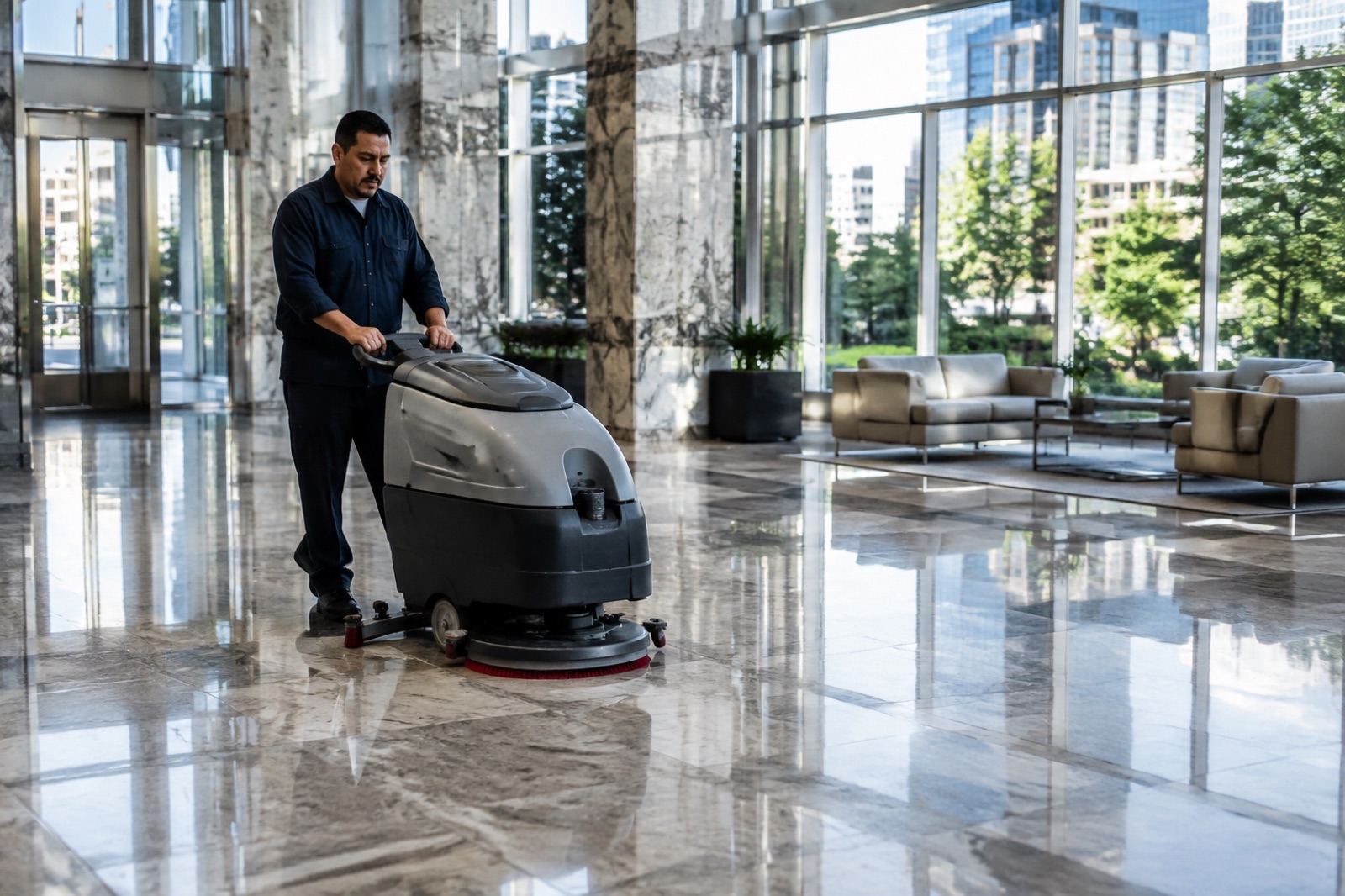
Commercial floors influence first impressions, safety, and maintenance costs. Yet routine mopping, machine scrubbing, carpet care, buffing, stripping, and finishing are different processes. The right option depends on the floor—not the name of the building.
This guide helps DFW offices, retail spaces, and facilities plan a practical floor-care program.
Identify the flooring before choosing a process
Luxury vinyl tile, vinyl composition tile, ceramic tile, natural stone, sealed concrete, laminate, and wood have different moisture, chemistry, abrasion, and finish requirements. Misidentification can create haze, damage coatings, or make floors unsafe.
Keep manufacturer and installer information when available. Test unfamiliar products and methods in an inconspicuous area.
Routine care versus restorative work
Daily or recurring care removes loose soil and spills before they scratch or spread. Periodic machine work addresses embedded soil, traffic lanes, or the maintenance needs of an existing finish system.
Stripping and refinishing is much more involved than mopping or scrubbing. It requires compatible products, controlled application, cure time, and a plan to keep people off the floor.
What “waxing” may mean
Many facilities use “wax” as a general term for a floor-finish system. The existing coating, flooring type, desired gloss, slip resistance, traffic, and maintenance equipment determine what is appropriate.
A provider should inspect the floor before promising a finish result. Worn or damaged material may need repair or replacement rather than another coating.
Plan around traffic and downtime
Dallas–Fort Worth facilities often operate long hours. Divide large areas into phases, identify secure drying zones, and coordinate with employees, tenants, vendors, and security.
Weather also matters near entries. Rain and construction dust can quickly contaminate uncured or newly finished surfaces, so matting and access control should be part of the plan.
Build a useful floor-care scope
Measure each flooring type separately and note entrances, elevators, tight aisles, furniture, outlets, water access, loading areas, and overnight restrictions. Photos help, but a walkthrough is often the best choice for commercial work.
- Floor material and current finish condition
- Square footage by area and traffic level
- Required outcome: clean, scrubbed, polished, or refinished
- Operating hours and available cure time
- Furniture-moving and access responsibilities
- Ongoing daily-maintenance plan
Requesting commercial floor service in DFW
A sustainable plan combines routine soil removal with periodic work instead of waiting for severe wear. Document products and processes so future maintenance remains compatible.
MP Cleaning provides floor cleaning and waxing options for eligible DFW commercial properties. Request an assessment with your floor type, size, condition, and schedule.
Frequently asked questions
Is floor waxing suitable for every hard floor?
No. The correct process depends on material and any existing coating. Some floors should not receive a conventional finish.
How long must a finished floor remain closed?
Downtime depends on the system, coats, conditions, and manufacturer instructions. It must be planned before work begins.
Can worn flooring be restored by cleaning?
Cleaning can improve soil and appearance, but deep scratches, failed coatings, discoloration, or material damage may require repair.